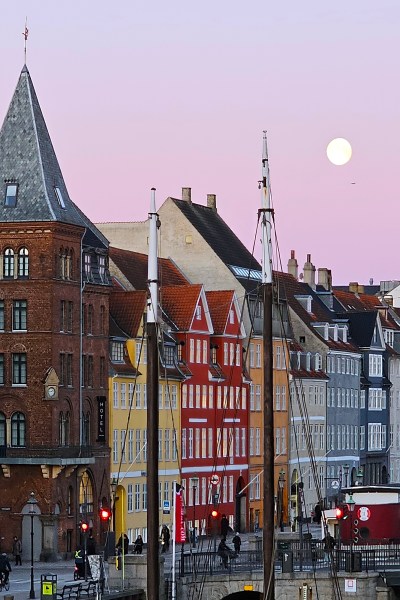
Full Moon

Copenhagen, Denmark
Winter · Feb 2026

There is something about a full moon that makes me stop and look. At Nyvayn, with the moon hanging bright above the dark landscape, the night seemed unusually still.

The moon waxes and wanes, growing brighter and then slowly disappearing from view. We tend to think of the full moon as the complete version, but it is only one moment in a much longer cycle. In a few days, the light will begin to thin again, and eventually there will be only a sliver.

Perhaps that is what I like about it. There is no need for every phase to be full or bright. The moon simply moves through them, one after another.

And then, quietly, it begins again.

Getting into It

You hear all about the magic of a hot-air balloon ride. Nobody ever mentions the awkward business of getting into the basket.

I found out the hard way.

The morning air was crisp and unexpectedly cold, despite it being the height of summer in southern France. We had driven for hours in the dark to get to the launch site, so by the time we arrived I was still only half awake, trying to work out where exactly we were. Around us, the pilots were already at work, laying out the enormous balloons and firing up the burners. Slowly, the colourful fabric began to fill with hot air, rising from the ground as the baskets were prepared.

Everyone else seemed captivated by the spectacle. I was too, at least initially, but somewhere between watching the balloons take shape and hearing the pilots explain what we were about to do, I became quietly aware of a more immediate problem.

I was wearing a dress.

I have a particular dress that I reserve for travel days involving long drives. It is comfortable, easy to wear and, in my mind, entirely appropriate for sitting in a car for several hours when I’m the driver. The journey to the launch site certainly qualified, so naturally, that was what I had chosen that morning since I was going to drive the leg back. It was only when we were getting ready to board that I discovered a small but rather important detail about hot-air balloon baskets: they don’t have doors. The only way in was to climb over the side.

Which is perfectly sensible when you’re wearing trousers. Less so when you’re wearing a dress.

I stood there for a moment, trying to work out whether there was some alternative entrance I had somehow missed. There wasn’t. The other passengers were already climbing in, while I contemplated the rather undignified manoeuvre that lay ahead of me. Eventually, with no other options available, I gathered up my dress and attempted to get myself over the side of the basket with as much dignity as the situation allowed.

Suffice it to say, it wasn’t my finest moment. My friends, sensing the seriousness of the situation, quietly gathered around me to provide what little privacy and dignity they could. I have no idea whether anyone else noticed. I prefer not to know.

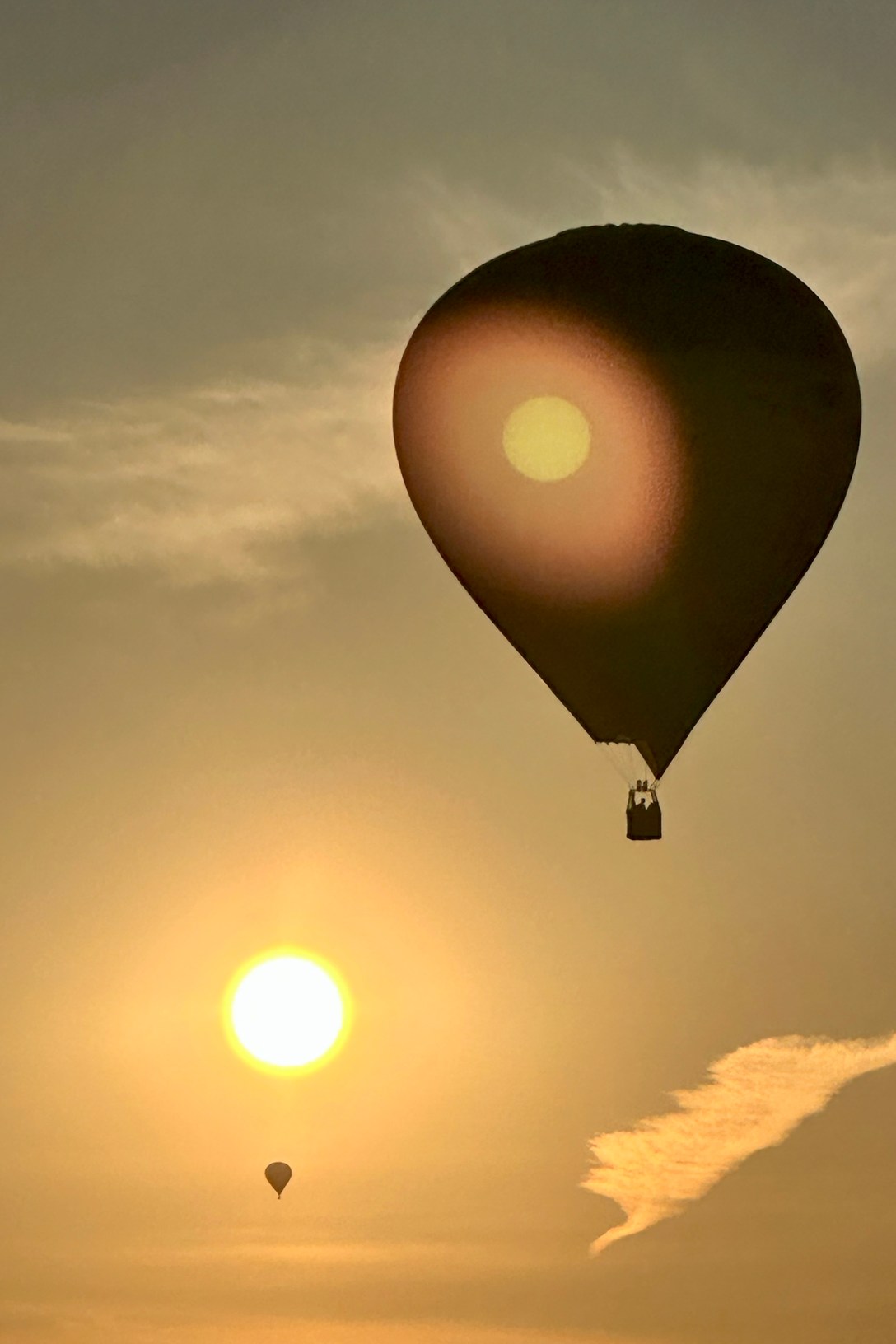
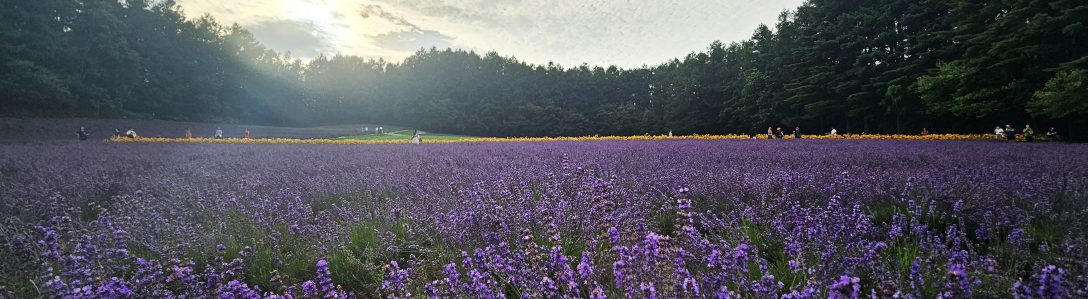
Once I was finally inside, however, the whole thing became a non-issue. The burners roared, the basket lifted gently from the ground, and within minutes we were floating above the French countryside. The sun was just beginning to rise, casting a soft golden hue across the bucolic landscape. Below us, fields stretched out in every direction, including long bands of lavender glowing purple in the early morning light, with little villages and winding roads scattered between them.

Up there, there was no thought of dresses or awkward climbs. Everything was quiet and unhurried. We drifted above the countryside as the sun climbed higher, the lavender fields gradually brightening below us. From that height, the landscape seemed almost unreal — neat rows of fields, tiny houses and roads disappearing into the distance, all softened by the warm morning light. It was one of those experiences that made me wish I could slow time down.

Eventually, of course, the balloon had to come down. And that meant getting out. I had rather conveniently forgotten about this minor detail but unfortunately, there was no way out of it. Naturally getting out was every bit as graceful as getting in.

I would like to say it was easier the second time. It wasn’t. But after a morning like this, a little embarrassment seemed a small price to pay. I even managed to drop my Gucci sunnies while helping to pack up the balloon. Somehow, it still felt worth it.
The Village People

They say it takes a village to raise a child. Sometimes, that village gathers in the kitchen to bake chocolate cookies for Teachers’ Day.

I have not baked cookies in a long time, having moved on to other confections and, more recently, bread. But baking with my nine-year-old nephew calls for something foolproof and forgiving, and few things fit the bill better than a good ol’ drop cookie.

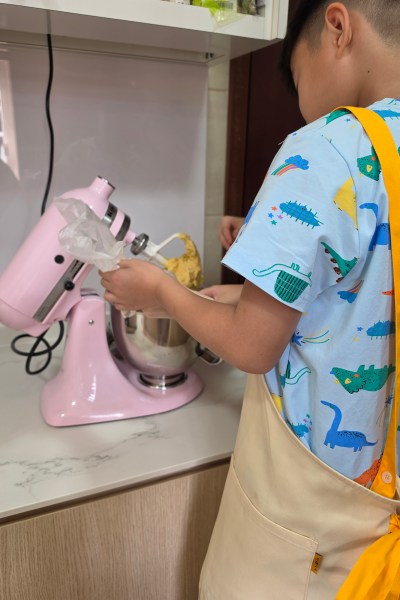
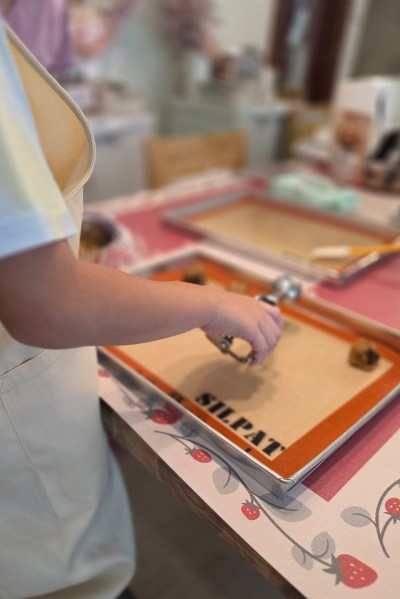
So we measured, mixed, scooped and baked — a little flour here, a little chocolate there, and quite a bit of tasting along the way. He took his responsibilities seriously, particularly the tasting part. He was also very taken with my KitchenAid, wanting to ramp up the speed to level 10 several times. Just how do you tell a young boy that sometimes more haste, less speed, especially where baking is concerned?

There is something quite different about baking with a child. Everything takes a little longer. Measurements have to be explained, instructions occasionally have to be repeated, and apparently no bowl of chocolate chips can be left unattended. And then there was the repeated question: “Can I eat one now? Or three?” He asked often enough that I began to wonder whether he thought the cookies were actually being made for him.

But there is also something satisfying about seeing the look of wonder on his face — that moment when following a recipe stops being a series of instructions and starts becoming something he has made. He wanted to do things properly, and was afraid of making mistakes. He was also surprisingly serious about mixing the batter thoroughly so the chocolate chips and chocolate chunks were well incorporated, and about getting the batter roughly the same size. Clearly he  understood the assignment, that in baking some things had to be done in a particular order. I was reminded that what seems obvious after years in a kitchen is not necessarily obvious to someone seeing it for the first time.

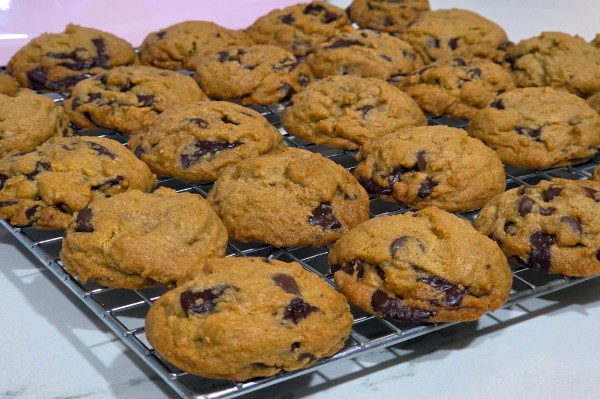
And perhaps that is part of the fun. Baking is wonderfully forgiving when you are nine. A misshapen cookie is still a cookie. A little too much chocolate is hardly a catastrophe. Even the ones that spread more than intended still disappeared rather quickly.

These were for his teachers, a small thank-you made by hand. There is something rather nice about that: taking the time to make something for the people who, in their own way, have been part of his village.

And yes, I know someone is going to ask for the recipe. It will appear here eventually. Just not… yet.

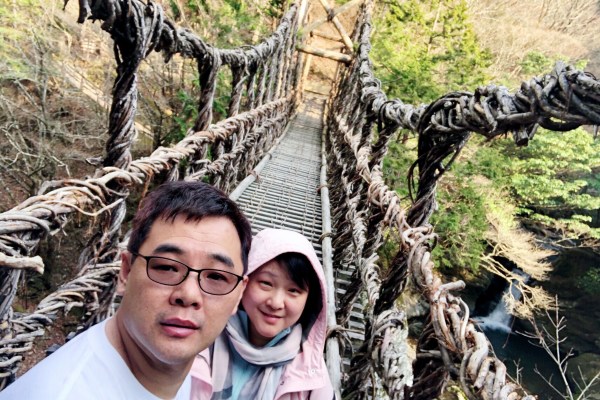
Stepping into the Frame

Tokushima, Shikoku, Japan
Spring · Apr 2018

For years, I was the one behind the camera. And I was a prolific photographer, with folders filled with landscapes, meals, little corners of cities and moments that caught my eye. Yet when I was putting together a collage for our 20th wedding anniversary, I realised something strange: I could hardly find any photographs of the two of us together.

One of the frames we finally remembered to step into.

I had documented so many journeys, but somehow forgotten to include the two people who were making them.

So these days, we make a conscious effort to be in the frame together. Not because every moment needs to be recorded, but because one day, we may want to remember not just where we went, but that we were there together.

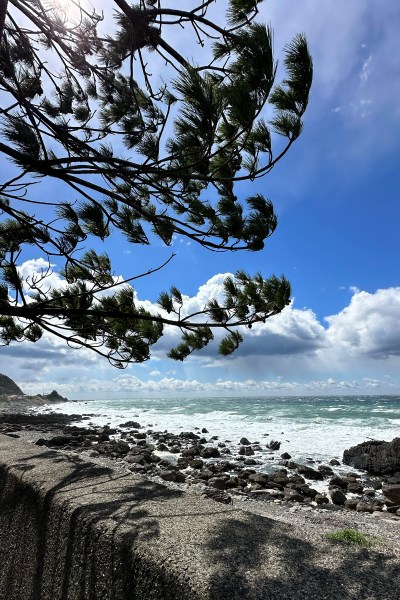
What the Waves Remember

Kōchi, Shikoku, Japan
Spring · Mar 2024

Standing before the raging waters of Kōchi, I lost myself for a moment in the fury of the waves. I stood there almost motionless, just watching them rise, break, and crash against the shore. For a while, I barely noticed anything else around me. My thoughts wandered—not really to the ocean itself, but to the people who had once set out into it. Fishermen who knew these waves not from a distance, but from within them.

The Pacific Ocean hurled itself relentlessly against the rocks. Strong winds tore at hats, scarves, and umbrellas. Parents instinctively held on to their young children as they stood watching. Cars pulled over along the coast, and strangers seemed to fall into the same quiet silence as I did, completely captivated by the raw force in front of us.

I shuddered, partly from the cold, but mostly from imagining what these waters must have been like centuries ago. Before modern engines and reinforced hulls. When fishing was not just a job, but a livelihood, and every time a boat left the shore, there was always the possibility of not coming back. How frightening it must have been.

Courage is not the absence,
But the conquest of fear.

For the first time, I understood courage a little differently.

It was not necessarily found in dramatic acts of heroism, but in ordinary people pushing their boats into a sea that frightened them because their families depended on it. Fear was never the opposite of courage. It was part of it.

Later, I learned more about the Nankai Trough, the offshore subduction zone capable of producing some of Japan’s most powerful earthquakes and tsunamis. Kōchi is among the prefectures most directly exposed to it. Knowing this added another layer to what I had already felt standing there. The people of Kōchi have lived for generations with the knowledge that the sea that sustains them can also threaten them.

Perhaps that is why what stayed with me was not really the violence of the waves, but the quiet resilience of the people who have learned to live alongside them. They do not conquer nature, but they do not surrender to it either. They simply carry on, with a deep respect for its power, accepting both what it gives and what it can take away.

The sea has given Kōchi an extraordinary abundance of seafood and shaped a culture deeply connected to it. But watching those waves, I began to think that every catch brought ashore carries with it generations of courage, perseverance and quiet resolve.

Long after the roar of the Pacific faded behind me, that memory was what stayed with me the longest.

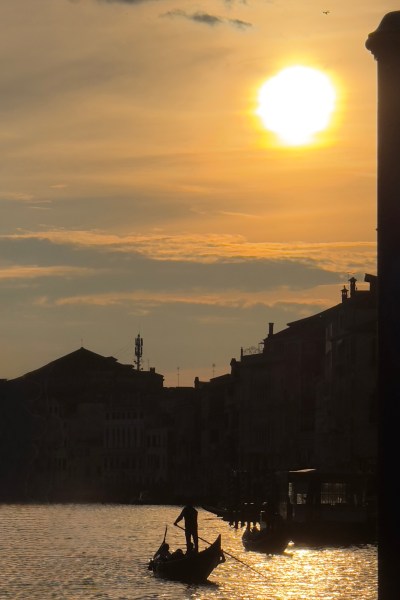
Some Places Need No Introduction

Venice, Italy
Winter · Feb 2025

Some places are instantly recognisable. And Venice doesn’t need an introduction.

Few cities carry an identity so effortlessly.

I’ve been here more than once, and perhaps that is why Venice feels less like a place I visit and more like a place I return to. There is something about its quiet beauty, its strange sense of time… the way it seems to exist entirely on its own terms.

One of my favourite cities, always.

When the Wind Became the Memory

Copenhagen, Denmark
Winter · Feb 2026

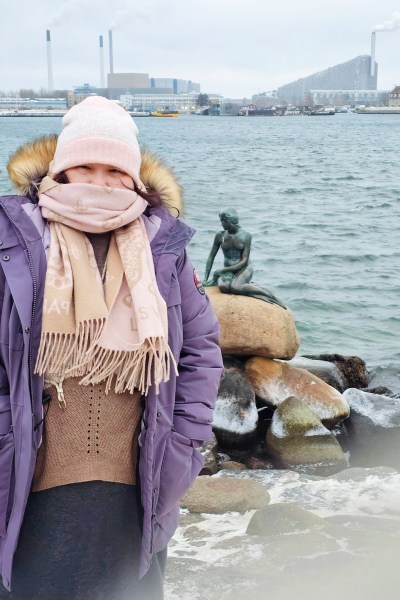
We knew the Little Mermaid wasn’t far.

“Just a short walk from Nyhavn,” they said.

It was a mere 1.7km on paper, a perfectly manageable distance by any measure. But by the time we reached the Little Mermaid, I wasn’t thinking about Hans Christian Andersen anymore; I was wondering whether a nose could actually freeze off.

I knew Wellington, New Zealand, was famous for its winds. What I didn’t know was that Copenhagen could be just as relentless. And I certainly wasn’t expecting it to feel colder than Tromsø. It was, and my carefully packed winter wardrobe proved no match for the biting wind.

At some point, the hubs suggested we cut inland, or take an Uber. But I insisted we keep going. Apparently, I had become very committed to the Little Mermaid.

Suffice it to say, it was the longest and most painful 1.7km I’ve ever walked.

By the time we arrived, I simply couldn’t muster the same enthusiasm as everyone else gathered around the monument. I was cold, miserable, nursing a headache—and, as it turned out, my nose hadn’t frozen off. I just couldn’t feel it anymore.

The face of someone questioning every life choice that led to this 1.7km walk.

Maybe it was the biting wind talking, but I found the Little Mermaid surprisingly underwhelming. She was much smaller than I’d expected, and the skyline was more smokestacks than storybook. It wasn’t exactly the fairy-tale setting I’d imagined.

In retrospect, I probably should have listened to the man and saved myself the misery.

A Matter of Perspective

Nakafurano, Hokkaido, Japan
Summer · Jul 2026

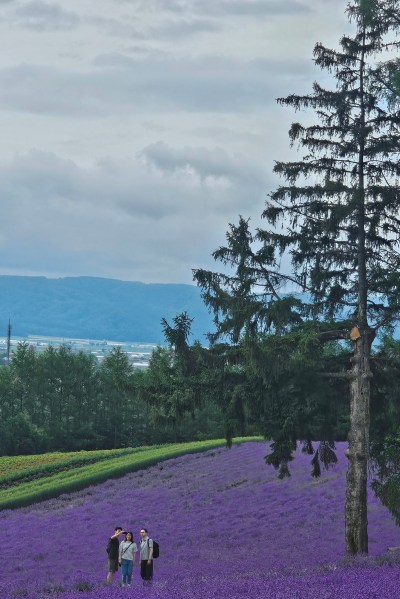
It wasn’t the lavender fields that lingered with me long after we left, but the sight of a family of three standing beneath a lone tree, dwarfed by the vastness around them.

There was no time to compose the shot. I caught it almost by instinct, just before the scene disappeared.

Only later, when I looked at the photograph, did I understand what had drawn my eye. The family wasn’t really the subject at all. It was the sheer scale of the place that stayed with me. Their smallness made the space feel even larger, but it also give the photograph a sense of life within all that grandeur.

Before We Become Insiders

Somewhere along the way, I started attempting not to dish out unsolicited travel advice.

It wasn’t because I ran out of recommendations. If anything, we’ve accumulated more over the years: small family-run restaurants, quiet neighbourhood cafes, overlooked alleys… places we’d happily return to. It was because I realised something: every traveller has a first time.

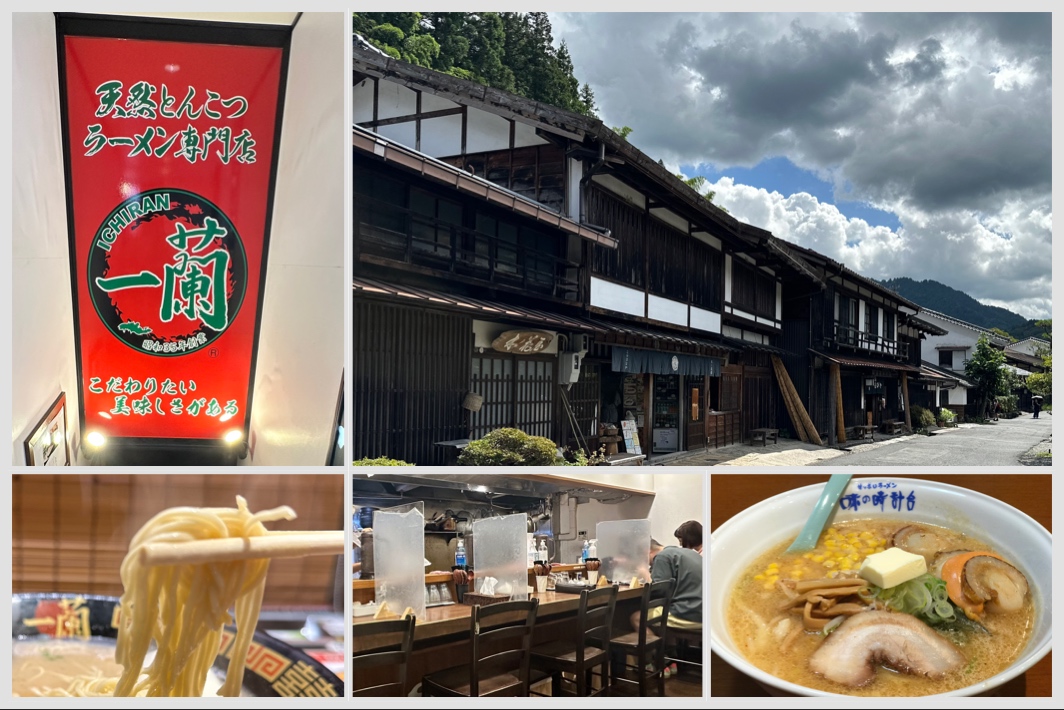
If it’s your first visit to Japan, perhaps you’ve dreamt about eating at Ichiran long before you booked your flight. Maybe you’ve watched countless reels of diners seated in individual booths, waiting for that first steaming bowl of tonkotsu ramen. Then someone tells you to skip it.

“It’s overrated.”

“It isn’t worth the wait.”

“Go where the locals go.”

“There are so many better places.”

Perhaps they’re right.

We’ve had wonderful bowls of ramen in tiny neighbourhood shops with handwritten menus, no queues and not a word of English. Sometimes there’s only one item on the menu. And some of those meals remain among our favourites. Yet somehow, every time we’re back in Japan, we find ourselves back at Ichiran again. Not because we think it’s the best ramen in Japan or because it’s a hidden gem, but simply because we enjoy it. We like being able to customise our bowl, we know exactly what to expect, and after so many visits, it’s become one of those familiar stops we genuinely look forward to.

Over time, we also started measuring our travels by how obscure our discoveries were. We hoped to stumble upon the hidden café, the restaurant with no tourists, the alley no guidebook mentions. There’s nothing wrong with that. Some of our favourite travel memories have come from wandering into places we hadn’t planned to visit. But there’s something equally satisfying about finally experiencing a place you’ve imagined for years, whether that’s the crossing at Shibuya, the torii gates at Fushimi Inari, or a bowl of ramen at Ichiran.

I’ve come to believe that neither experience is more valid than the other. Travel isn’t a test to pass or a summit to conquer. It’s deeply personal. What becomes unforgettable for one person may be entirely ordinary to another.

So if it’s your first trip to Japan, order that ramen you’ve always wanted to try. If it’s your tenth, wander into the little ramen joint tucked away down an alley. If you eventually end up doing both, even better.

As for us, we’ll probably still queue for Ichiran every time we’re in Japan. Not because it’s the best, but because we like it.

Before we become insiders, we all deserve to be first-time travellers.